Instructional Design & Healthcare eLearning
Enterprise Healthcare Operations & Systems Compliance
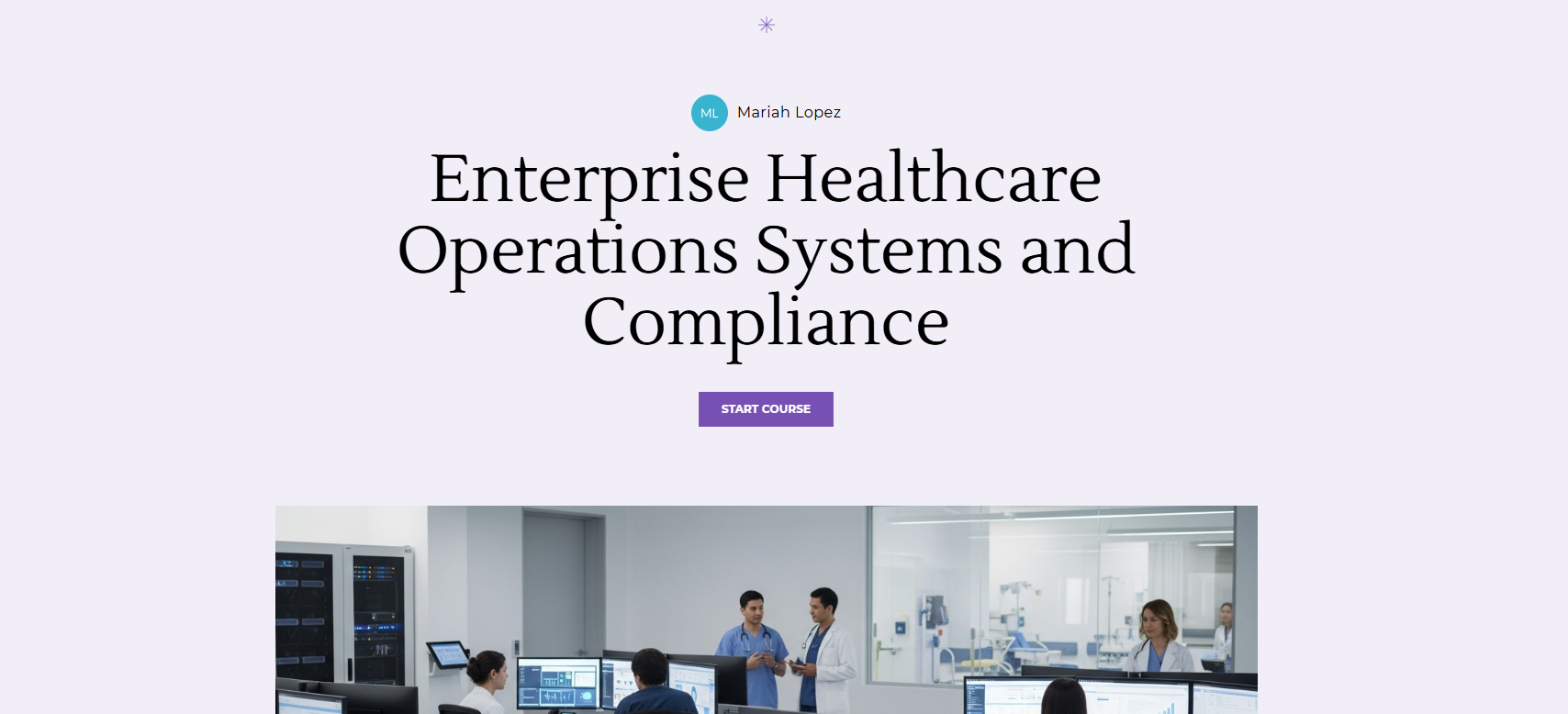
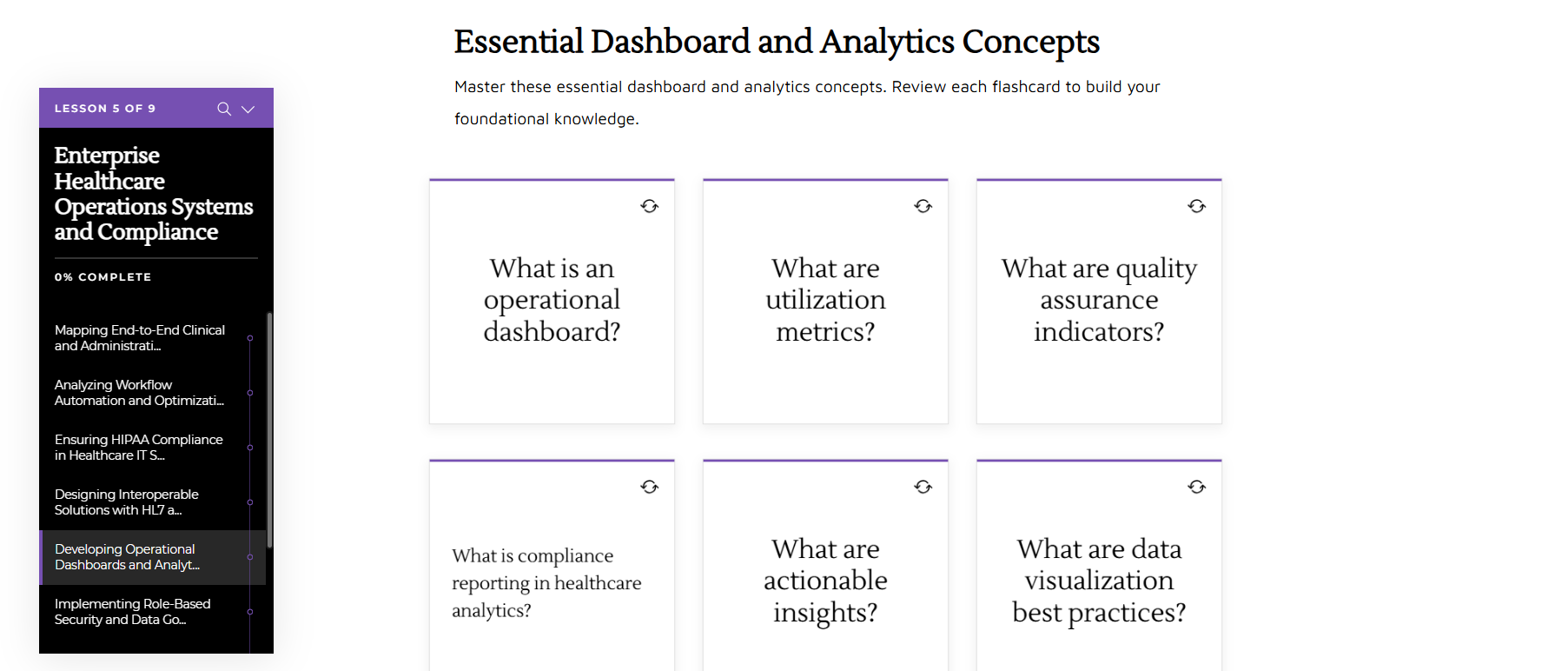
Designed an eLearning session in Articulate 360 to orient healthcare staff to enterprise operations, systems compliance, and medical coding workflows, supporting organizational onboarding and regulatory readiness.
Responsibilities
Compliance Analysis
Analyzed compliance training requirements and medical coding workflows for healthcare onboarding.
Learning Objectives
Defined measurable learning objectives for healthcare systems orientation and coding workflow readiness.
Course Structure
Structured course content to align with regulatory, operational, and enterprise healthcare standards.
Interactive Development
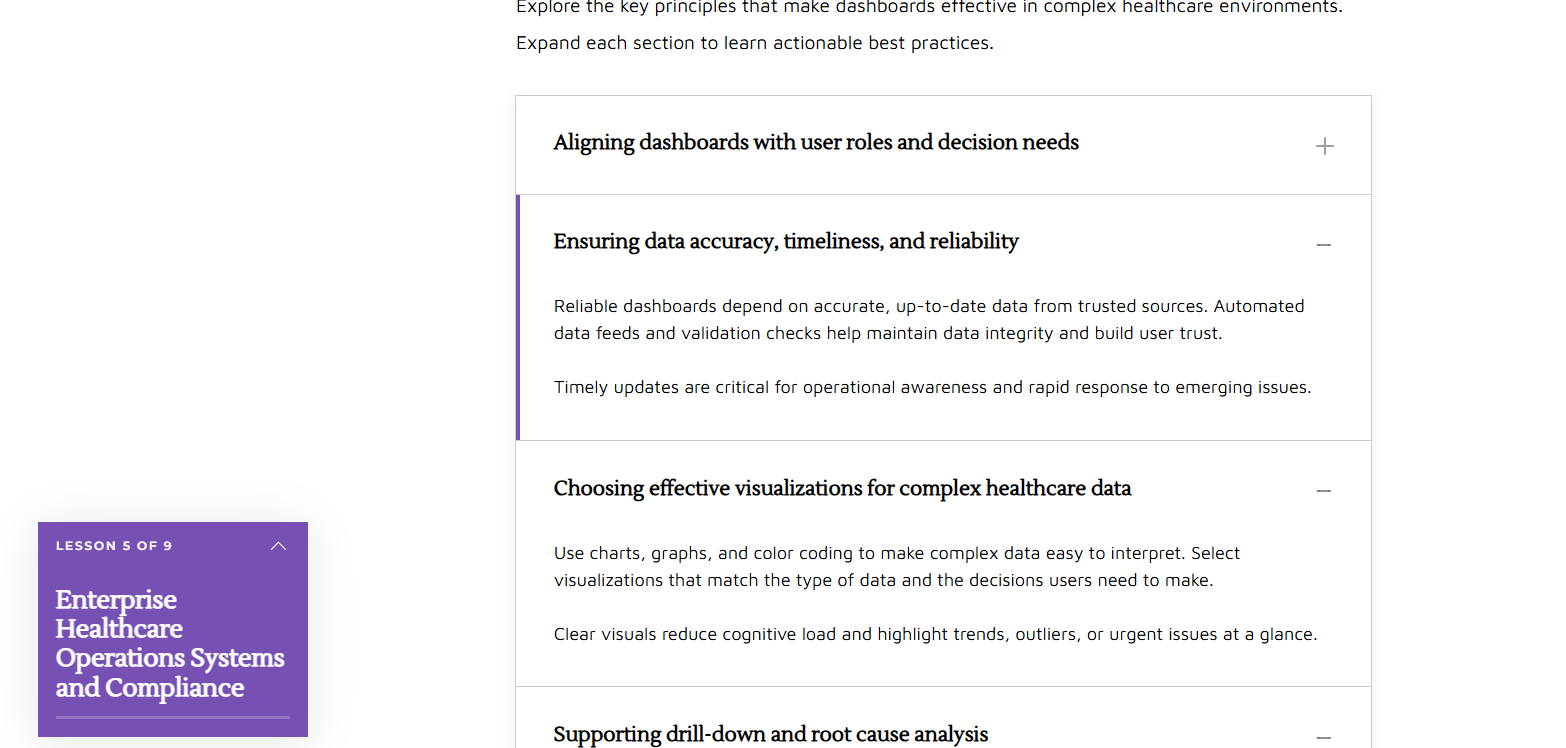
Developed interactive eLearning content in Articulate 360 to support systems and compliance training.
Coding Scenarios
Created scenario-based activities that reinforced medical coding procedures and decision logic.
SME Review
Iterated the course design based on healthcare operations subject matter expert feedback.
Overview
Orienting healthcare staff to enterprise systems and compliance workflows
This eLearning session supports healthcare staff joining enterprise organizations that require fluency in both operational systems and compliance standards.
The course focuses on medical coding workflows, translating clinical documentation into standardized codes within the broader context of healthcare information systems and regulatory requirements such as HIPAA and ICD coding standards.
Service Value
Supporting onboarding, compliance readiness, and workflow accuracy
The value of this project comes from simplifying complex healthcare operations content into a structured eLearning experience. The course helps learners understand how coding workflows connect to billing accuracy, audit readiness, and patient records integrity.
Course sections covering enterprise systems, medical coding workflows, and compliance checks.
Passing threshold required for section assessments tied to measurable learning objectives.
Iteration cycles completed after subject matter expert and peer review.
Problem & Goals
Helping healthcare staff understand compliance before workflow errors occur
Healthcare staff entering enterprise environments often face a steep learning curve around systems compliance and the procedural logic of medical coding.
Errors in coding directly affect billing accuracy, audit outcomes, and patient records integrity. The goal was to create a clear, accessible eLearning experience that explains how coding workflows fit into the larger operational picture.
Compliance Readiness
Help learners understand the standards and documentation requirements connected to coded healthcare information.
Coding Accuracy
Reinforce medical coding decision logic through scenario-based activities and guided practice.
Systems Awareness
Show how EHR platforms, billing systems, compliance frameworks, and coding workflows connect.
User Scenario
Join Enterprise Healthcare
A new healthcare staff member begins onboarding in an organization with complex systems and compliance expectations.
Learn System Relationships
The learner needs to understand how EHR platforms, billing systems, and compliance frameworks connect.
Apply Coding Logic
The learner practices translating clinical documentation into standardized ICD and CPT coding decisions.
Check Compliance
The learner reviews required documentation elements before submitting a coded claim.
Work Accurately
The learner applies course guidance to support accurate documentation, billing, and audit readiness.
My Role
Translating compliance documentation into a clear learning sequence
As instructional designer, I mapped content from compliance documentation and medical coding process guides into a structured eLearning sequence.
I wrote all instructional content, designed interactive activities to reinforce coding decision logic, and developed the full course in Articulate 360. Subject matter expert review from a healthcare operations lead informed two rounds of content revisions.
Healthcare Staff Learner
New staff member learning enterprise workflows
This learner needs a clear explanation of systems, compliance expectations, and medical coding procedures.
Goals
- Understand healthcare systems relationships
- Apply coding workflow logic
- Follow compliance requirements accurately
Healthcare Operations Lead
Subject matter expert and onboarding stakeholder
This stakeholder needs staff to understand compliance-critical workflows before working independently in enterprise systems.
Goals
- Improve onboarding consistency
- Reduce coding and documentation errors
- Support audit-ready operations
Discovery & Constraints
Simplifying complex healthcare compliance content without losing accuracy
Discovery included reviewing enterprise healthcare onboarding materials, HIPAA training requirements, and ICD-10 coding documentation standards.
A key constraint was managing content complexity. Medical coding involves nuanced procedural logic that must be simplified for a broad learner audience without sacrificing accuracy or compliance fidelity.
Content Complexity
The course needed to explain technical healthcare workflows in a clear, accessible format.
Compliance Accuracy
Instructional content needed to remain aligned with coding standards and regulatory expectations.
Time Constraint
The course needed to be completed in under an hour while covering systems orientation and core coding concepts.
Key Features
Enterprise Systems Orientation
The course explains the relationship between EHR platforms, billing systems, compliance frameworks, and healthcare documentation workflows.
Interactive Coding Scenarios
Scenario-based activities ask learners to select the correct code for a clinical description from multiple options, reinforcing coding decision logic.
Compliance Checklist Activity
A checklist activity helps learners identify the required documentation elements before submitting a coded claim.
Information Architecture & User Flows
Structuring the course around systems, coding, and compliance checks
The course is organized into three sections: healthcare enterprise systems overview, medical coding workflows, and compliance and quality checks.
Learners move through the sections sequentially, with coding scenarios embedded in Section 2 and a compliance checklist activity in Section 3.
Primary Learner Flow
Enterprise Systems Overview → Medical Coding Workflows → Interactive Coding Scenarios → Compliance Checklist → Section Assessments → Completion
Wireframes & Prototypes
Storyboarding compliance-critical learning content before development
A storyboard was developed prior to Articulate 360 development, mapping each slide’s instructional content, interaction type, and compliance-critical callouts.
The storyboard was reviewed by a healthcare operations subject matter expert to validate workflow accuracy and identify gaps in coding procedure coverage before full course development.
Requirements & Acceptance Criteria
Measuring learner understanding of systems, coding, and compliance requirements
Learning objectives specified measurable outcomes: learners should be able to identify the stages of the medical coding workflow, apply ICD-10 coding logic to a clinical scenario, and describe the compliance requirements governing coded documentation.
Assessment items were tied directly to these objectives, with an 80% passing threshold per section.
Analytics, Iteration, Outcomes & Next Steps
Refining coding scenarios and compliance terminology through review
Two iteration cycles were completed following SME and peer review. The first cycle refined the ICD-10 scenario activities to better reflect real-world coding complexity without exceeding the scope of entry-level competencies.
The second cycle added a glossary of key terms after learner feedback showed that abbreviations in the compliance section needed clearer definition.
Develop a companion course focused on CPT procedure coding.
Create a facilitator guide for blended delivery during instructor-led onboarding.
Use completion and assessment data for compliance recordkeeping and future course updates.
Next Steps
Next steps include developing a companion course focused on CPT procedure coding and creating a facilitator guide for blended delivery in instructor-led onboarding sessions.
Future iterations would use completion data, assessment scores, SME feedback, and learner questions to refine scenarios and strengthen compliance support.
Learnings
This project strengthened my ability to translate compliance-heavy healthcare content into structured, accessible eLearning.
I also learned how important it is to balance accuracy with clarity when designing training for complex workflows such as medical coding, documentation review, and enterprise systems compliance.